Blog
In asset finance software the asset record is the whole chain
By NETSOL Technologies , on August 13, 2026
See how end-to-end asset finance software keeps one asset record across origination, credit, servicing and collections, reducing re-keying and data errors.
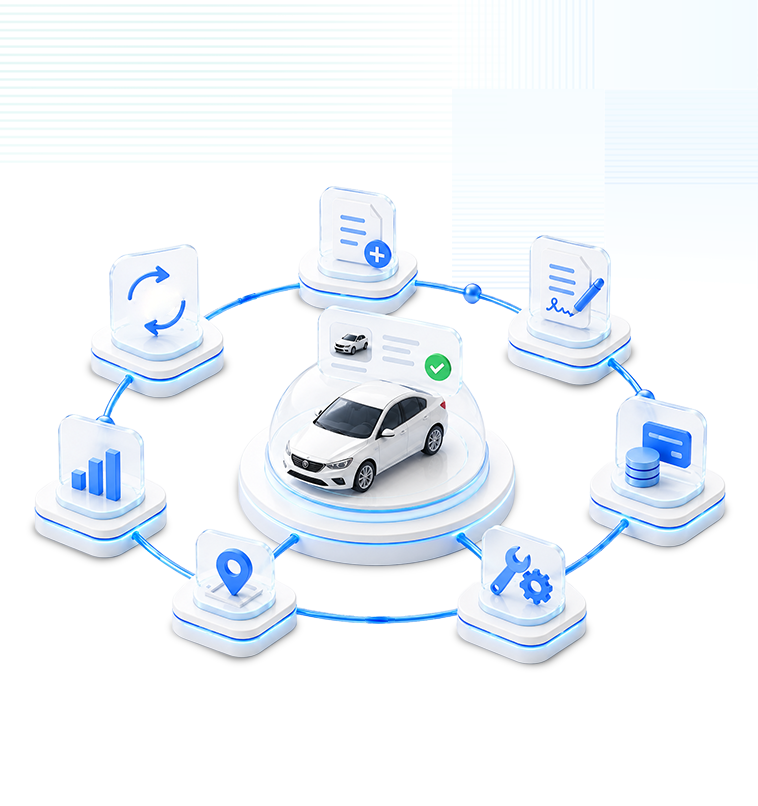
Table of Contents
Subscribe to our newsletter
Share this Blog:


A serial number is read off an excavator and typed into a quoting tool. It is typed again into the credit submission, then onto the security document, then into the registration. The same 17 characters entered four times. Nobody finds out it went wrong until the customer stops paying.
End-to-end asset finance software earns its keep twice. Fewer handovers mean less waiting, which is the efficiency case everyone makes. The second gain is quieter and larger. One asset record survives from quote to end of term, because every handover is a chance for the description to drift.
Asset finance software loses the asset between operations
Origination, credit, documentation and servicing are usually four systems. The joins between them are where the work actually goes. That gets harder as the portfolio widens. A construction fleet, an agricultural machine and a hospital imaging suite are each described, documented and identified differently. Every asset class you add is another way for the same description to drift.
Ask where the asset description lives at each step. The quoting tool holds a category and a price. Credit holds a residual assumption. The security document holds a make, model and serial number. Settlement adds a supplier invoice. At end of term the asset is whatever the remarketing team can find.
If those are four records, somebody keeps them aligned by hand. That person is usually on leave when the discrepancy is found.
The registry does not care why the data was wrong
Australia gives this a hard edge. A security interest in equipment is registered on the Personal Property Securities Register (PPSR). The register is unforgiving about detail, a discipline that also runs through equipment finance software for specialised lending.
The Registrar's guidance for anyone creating a registration state plainly that "it's important to get your registration right or you risk it being ineffective" (Personal Property Securities Register registration guidance, 2026). It then applies that to particular fields. Register against the wrong details for the party giving the security and other people may not find the registration when they search. Set the purchase money security interest flag incorrectly and the registration can be defective.
Read that as a data problem rather than a legal one. The fields that decide whether registration holds are the fields your origination system captured. Every re-entry between systems is another chance to get one wrong.

Figure. The same asset at five steps, and what each step records about it.
Collections and end of term read the same record
The lifecycle argument is easiest to see at the unhappy end. Collections and remarketing both need to identify a physical object rather than an account number. That is the point behind equipment finance software holding a schedule and a meter.
A collections officer on an arrears account needs to know what the asset is and where it went. They also need to know whether it is fixed to a site and whether the registration is clean. Remarketing needs the same facts, plus condition and hours run. Both are asking questions the origination record answered years earlier.
When servicing and collections sit on the same platform as origination, those answers are a lookup. Otherwise the answer is a phone call to whoever still has the file.
What this means for asset finance leaders
- Treating the asset record as the thing that runs end to end, since the security and the recovery both attach to the asset rather than to the customer
- Counting how many times a serial number is re-entered between quote and registration, since each one costs time and is a chance to make a registration ineffective
- Giving collections and remarketing the origination record directly, rather than making them rebuild it years later
Frequently asked questions
What does end-to-end mean in asset finance software?
That origination, credit, documentation, servicing and collections all work from one record of the asset. The test is whether the serial number on the security registration came from the same place as the one on the invoice.
Why does re-keying matter more in equipment finance?
Because the security attaches to a specific identifiable asset. A customer record that is slightly wrong is an inconvenience. An asset record that is slightly wrong can leave you unsecured on the thing you funded.
The chain is only as good as its weakest handover
Consolidate the operations and you do save days. The cost that is easier to miss is that each boundary is a chance for the asset to be described differently. The register accepts only one description. Complex portfolios feel this first, because every asset class adds another way to describe the same machine.
In Transcend Finance for equipment finance origination, contract management, servicing and collections sit on a shared core, with the workflow and documentation for each asset class held as configurable settings rather than as separate systems. The asset entered at quote is the asset collections and remarketing look at years later. If you are counting the handovers in your own chain, we are happy to compare notes.

If you're in BFSI (Banking, Financial Services, and Insurance), standing still isn't an option.
Related blogs

Blog
Asset finance management software and the average that is not your book
Blog
Applying global best practice to UK auto finance software
Blog