Blog
Who decides when your wholesale finance software is upgraded
By NETSOL Technologies , on September 10, 2026
What lenders in the United Kingdom should agree before choosing a technology partner

Table of Contents
Subscribe to our newsletter
Share this Blog:


Your software provider has announced when support for your current platform version will end. There may be plenty of notice, but an important question remains. Who decides when the upgrade takes place?
The answer matters when a planned release overlaps with a busy trading period or leaves your teams with limited time to test changes. Before choosing a provider, establish how upgrade dates are agreed, how much notice you will receive and when a routine release can be moved.
Even a successful upgrade needs the right timing
Wholesale finance platforms support everyday dealer funding. An upgrade can change how the system handles curtailments, ageing, dealer limits, reports or connections to other systems. Your operations team may need to confirm that calculations and reports still match the live book.
If this work falls in a peak period, the team is testing the release while also managing higher volumes. Problems may take longer to find, dealer queries can increase and reconciliation becomes harder.
That makes upgrade timing a business decision. Operations, finance, risk and technology leaders all need a say.
The Financial Conduct Authority (FCA) says firms within scope remain responsible for important business services when a third-party provider is involved. The regulator also expects firms to manage these relationships actively. A lender cannot hand responsibility for service resilience to its software provider.
The contract should settle the timing before the first upgrade
A product roadmap tells you what is coming. It may not tell you what happens when a planned release clashes with your peak period. The contract should set out the process before that conflict arises.
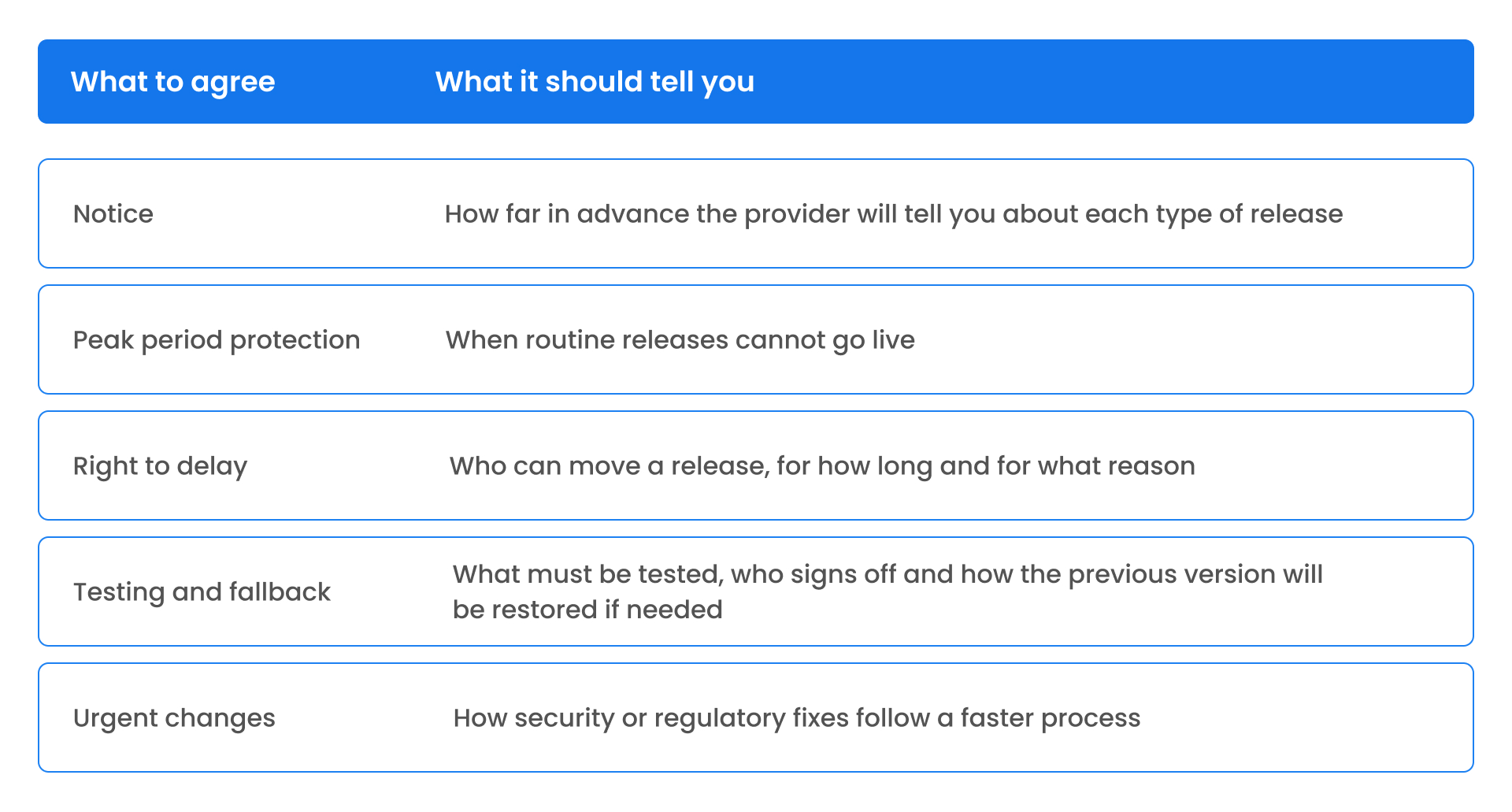
Urgent security and regulatory fixes may need to move quickly. Routine changes should follow an agreed timetable, with enough time for testing and preparation.
Someone needs to own the process
A contract cannot run the upgrade process by itself. You need a named person on both sides, a backup contact and a clear route for escalation.
Ask where test results, approvals and exceptions will be recorded. If the account manager changes, the next person should be able to see why a release was approved or delayed.
Keep this information in a shared record so the process does not depend on one person.
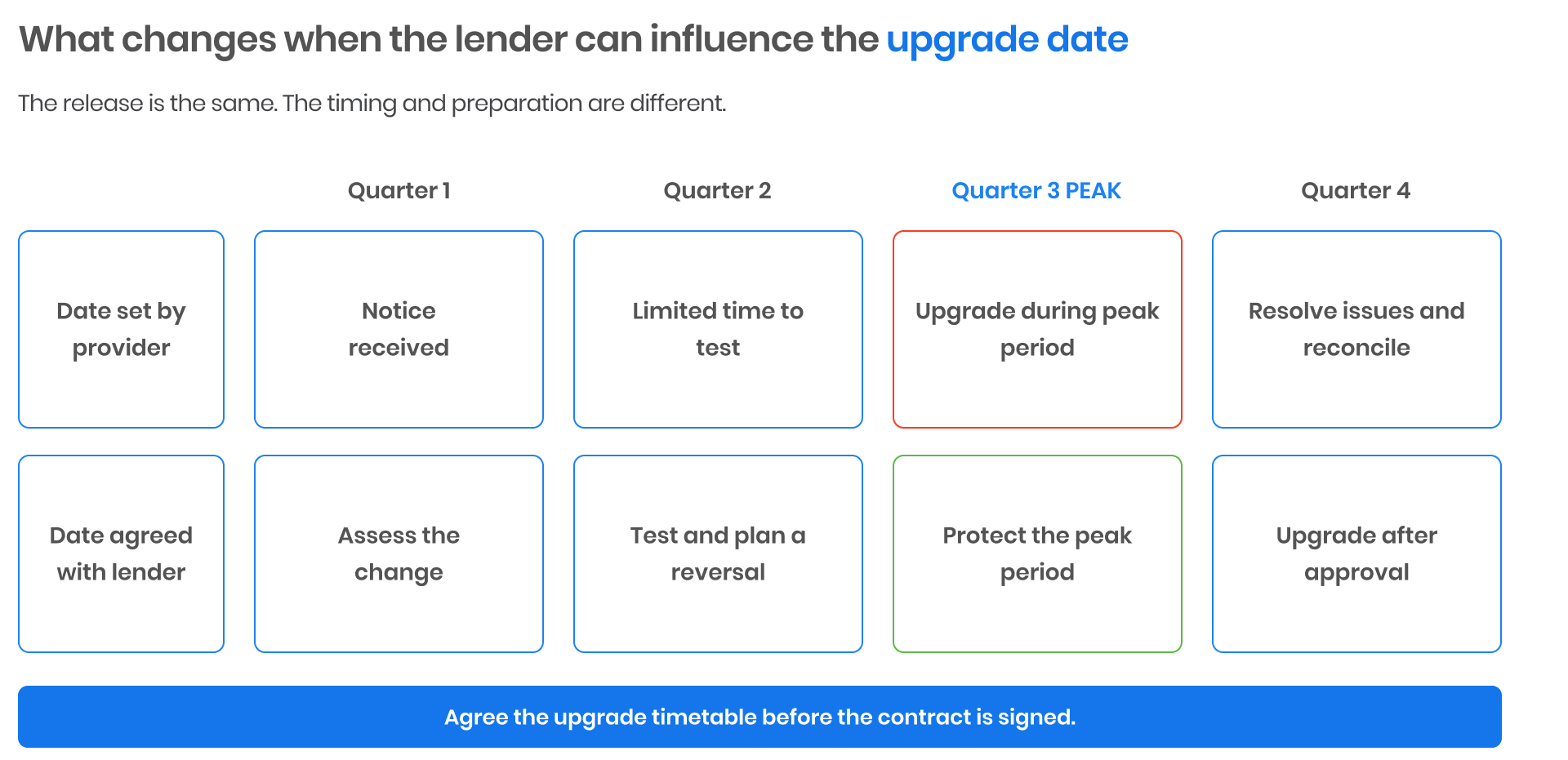
Figure 1 shows the difference between an upgrade date set mainly by the provider and one agreed with the lender.
Ask to see the process before you sign
- The release calendar. Review the planned releases and notice periods for the next 12 months.
- An impact assessment. See how the provider explains which calculations, reports and integrations could change.
- A test and approval record. Confirm who checks the release and what evidence is kept.
- A delay request. Walk through how a lender moves a routine release away from a peak period.
- A fallback plan. Understand how service will be restored if the release causes a problem.
Questions lenders often ask
How much notice should a wholesale finance software provider give?
There is no single period that suits every release. The contract should set a notice period for each type of change. Routine updates need enough time for review, testing and dealer communication. Urgent security or regulatory changes may need a faster route.
Can a lender delay a routine platform release?
Only if the contract or operating agreement allows it. The process should state who can request a delay, who approves it and how long it may last. It should also explain when an urgent change can override the normal timetable.
What should the upgrade clause cover?
It should cover notice periods, protected trading dates, testing responsibilities, approval, fallback arrangements, escalation and urgent changes. Each point should name the people who make the decision and the evidence they need.
Review the upgrade process before choosing the software
A demonstration shows what the software can do today. It does not show how future changes will be managed. Before selecting a provider, ask how releases are planned, how your team can influence the date and what happens when an update falls in a busy period.
Use these questions during your next selection or contract review.
NETSOL’s Transcend Finance Wholesale solution supports wholesale loan origination, servicing and digital dealer self-service. Its mDealer application gives dealers mobile access to floorplan utilisation, stock and portfolio information, settlement requests, asset relocation and audit support.
If you are reviewing your wholesale finance technology, speak to NETSOL about how the platform and its connected dealer tools can be introduced, tested and managed around your operating calendar.

Modernise your asset finance operations with NETSOL
Related blogs

Blog
What a wholesale lending platform lets you say yes to

Blog
NETSOL is ready for Palm Desert: Transcend Finance to take center stage at ELFA 2026
Blog