Blog
Should every US dealership feature hybrids as sales rise?
By NETSOL Technologies , on November 16, 2026
Conventional hybrids are gaining share in US new-vehicle sales. A dealer group could see that as a reason to feature hybrids at every dealership. Yet many EV owners who replace their cars choose another EV. The group still has to choose what each store puts in front of shoppers.
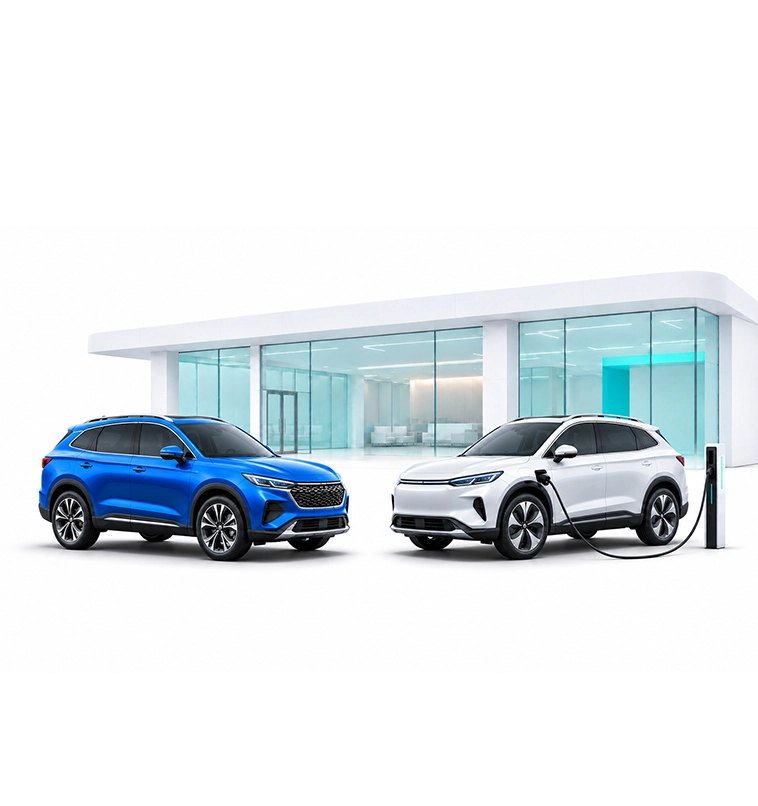
Table of Contents
Subscribe to our newsletter
Share this Blog:


Each dealership should feature the vehicles its own shoppers consider and it can sell now. Hybrid growth gives the group useful market context, but it does not describe every store's customers. Rooftops can lead with different battery EVs, conventional hybrids or plug-in hybrids while giving shoppers a consistent way to move from the featured vehicle toward a deal.
Hybrid growth does not describe every shopper
Through October 2026, conventional hybrids made up 15.7% of US new light-vehicle sales. That was 3.1 percentage points more than in the same period of 2025, according to the National Automobile Dealers Association (NADA, 2026). Hybrid demand is clearly worth a dealer group's attention.
Existing EV owners tell another part of the story. Among those who returned to the US market to replace a vehicle in the 12 months through Q2 2026, 72.2% chose another EV (Experian Automotive, 2026).
NADA counts new-vehicle sales across the market. Experian follows existing EV owners choosing a replacement. National data can show both trends because the studies cover different buyers.
Each rooftop has its own answer
At store level, completed sales can show what customers chose. For buyers with a trade-in, the old and new powertrains show whether they stayed with an EV, moved to a hybrid or chose something else. Current online interest and available inventory help decide what to feature online.
The result may differ by rooftop. A store with EV replacements and EV stock has a reason to feature an EV. A store with strong hybrid sales may have a reason to feature a hybrid. Plug-in hybrids should be counted separately from conventional hybrids. An incentive can change interest, so a past sales pattern needs to be read alongside current stock and shopper activity.
Once a store features a vehicle, shoppers may want to build a payment, value a trade or arrange a visit. A group can make those steps familiar across its dealerships even when the featured cars differ. Our related article looks at the online-to-store handoff.
NETSOL's automotive retail guides cover the wider journey.
What to take away
- National hybrid sales and EV-owner replacement choices describe different buyers.
- Each dealership can feature vehicles that fit its shoppers, sales and available stock.
- The buying path can stay consistent even when the featured vehicles differ.
Questions dealer groups may ask
Does the EV replacement figure mean overall EV demand is rising?
No. Experian's 72.2% figure describes EV owners who returned to the market to replace a vehicle in the 12 months through Q2 2026. It shows what that group bought next. It does not measure total EV demand or predict sales at a dealership.
Does NADA's hybrid share include plug-in hybrids?
No. The cited 15.7% figure refers to conventional hybrids in US new light-vehicle sales through October 2026. Plug-in hybrids are a separate vehicle class. A dealership comparing its own sales with that figure should keep the classes separate.
The vehicle can vary; the deal path stays clear
The dealership chooses the featured car. The group can keep the next steps clear, so an interested shopper can move toward a purchase. That is the link between a local merchandising choice and the wider buying journey.
With Transcend Retail, shoppers can start payment and deal building, trade-in and digital credit steps online, then continue in the dealership. Those transaction steps reflect NETSOL's automotive-finance background and support a familiar journey behind different featured cars. If your group is reviewing that path across rooftops, talk with NETSOL.

One platform from first click to signed deal.
Related blogs
Blog
Automotive retail solutions are only as good as the handoff

Blog
Why equipment lending software must work after funding
Blog