Blog
Data modernization in 2026: Building AI-ready foundations for real time business
By NETSOL Technologies , on January 28, 2026
Discover how data modernization in 2026 enables AI at scale, real-time intelligence, and trusted data across hybrid environments into true competitive advantage.
Table of Contents
Share this Blog:


Data modernization has become one of the most urgent priorities for enterprises entering 2026. The conversation has moved well beyond storage upgrades or cloud migration projects. Today, modernization is about enabling real time decision making, supporting AI at scale, and ensuring data can be trusted across increasingly complex environments.
Organizations are facing unprecedented pressure from customers, regulators, and internal stakeholders to move faster and act smarter. Legacy data architectures, built for batch reporting and static analytics, are struggling to keep pace with these demands. As a result, data modernization is now seen as strategic infrastructure rather than an IT improvement initiative.
In this article, we’ll examine the driving forces behind data modernization in 2026, the challenges organizations face with legacy infrastructures, and how adopting modern, real-time data capabilities is critical for scaling AI solutions, enabling smarter decision-making, and ensuring trusted data across complex environments.
The scale of data is forcing a rethink
The volume of data being created globally continues to accelerate at a pace that legacy systems cannot handle.

Source: Statista
The volume of data created, captured, replicated, and consumed worldwide continues to grow at an unprecedented rate. Public estimates indicate that by 2025, approximately 182 zettabytes of data will be generated globally, with projections suggesting this could reach nearly 394 zettabytes by 2028. This rapid growth is driven by the expansion of digital usage, the rise of generative AI, IoT, real-time analytics, edge computing, and other forms of high-value data.

What makes this growth more challenging is where the data is generated. This shift makes traditional, centralized data platforms increasingly ineffective. Organizations must modernize data pipelines, storage, and governance to operate across distributed environments without losing visibility or control.
As data becomes more decentralized, cloud strategy alone is no longer enough.
Cloud adoption has reached a new phase
Most enterprises today describe themselves as cloud first, but that label often masks significant architectural debt. Many organizations have moved data to the cloud without rethinking how it is structured, governed, or consumed.
Hybrid and multi‑cloud environments have become the norm rather than the exception. According to IDC’s 2025 cloud market research, about 88 percent of cloud adopters are deploying hybrid or multi‑cloud strategies, with most organizations combining services from multiple cloud providers alongside on‑premises systems to boost resilience, flexibility, and avoid vendor lock‑in
This reality is reshaping data modernization strategies. Instead of centralizing everything in a single cloud platform, organizations are designing interoperable data architectures that support consistent access, governance, and analytics across environments.
As complexity increases, the quality and reliability of data foundations become even more critical, especially as AI adoption accelerates.
AI is raising the bar for data foundations

Source: Gartner
AI has fundamentally changed what organizations expect from their data platforms. Models require timely, high quality, well-governed data to deliver accurate outcomes. When data foundations are fragmented or unreliable, AI initiatives struggle to scale.
Gartner states that trusted, high‑quality data is critical for AI success and that many AI initiatives fail because of poor data quality.
At the same time, enterprise investment signals show growing recognition that AI success depends on data modernization. According to McKinsey’s 2025 State of AI report, organizations that systematically invest in and integrate data, technology, and adoption practices, as part of a broader AI transformation, are far more likely to capture meaningful enterprise value from AI compared with those that do not scale beyond pilots
As AI moves from experimentation to operational deployment, data modernization becomes the foundation that determines whether AI drives competitive advantage or operational risk.
This pressure is pushing organizations toward real-time data capabilities.
Real-time data is becoming the default expectation
Modern enterprises can no longer afford delayed insights. Customer behavior, operational signals, and risk indicators change continuously, and businesses are expected to respond instantly.
The demand for real-time data processing is reflected in market growth. According to Zion Market Research, the global streaming analytics market was valued at USD 24.39 billion in 2023 and is expected to reach USD 193.32 billion by 2032, growing at a CAGR of approximately 25.86 percent during the forecast period.
To support this shift, organizations are modernizing data pipelines to be event driven, automated, and observable end to end. Data is no longer something teams analyze after the fact. It is something they act on as it flows through the business.
This transition requires platforms that can ingest, process, and govern data in motion, not just at rest. As technology evolves, organizational models must evolve as well.
Modernization requires cultural and operating change

Data modernization is not purely a technical exercise. It requires changes in how teams work, how decisions are made, and how data ownership is defined.
A Harvard Business Review survey of more than 360 executives found that organizations that use data and analytics strategically across the enterprise outperform their peers on business outcomes like operational efficiency, revenue growth, and customer satisfaction. In this study, data‑and‑AI leaders were far more likely than others to have a clear enterprise strategy for managing and extracting value from their data and analytics capabilities
Leading organizations are investing in data literacy, shared metrics, and cross functional ownership models. Business users are increasingly expected to engage directly with data through self-service analytics and AI assisted tools.
Without this cultural alignment, even the most advanced data platform risks becoming underutilized infrastructure.
This focus on outcomes is changing how success is measured.
The path forward
Data modernization in 2026 is the backbone of AI readiness, real-time decision-making, and staying ahead in an increasingly competitive landscape.
Successful organizations focus on three priorities:
They design for hybrid and distributed environments
- They embed governance, security, and observability from the start
- They align technology change with operating and cultural transformation
This approach allows data platforms to scale with the business and adapt to future demands.
Those that delay risk being constrained by systems that cannot support modern speed, intelligence, or trust requirements.
Turn data modernization into a competitive advantage with Netsol
Data modernization is complex, especially in regulated, data intensive industries. It requires more than tools. It requires strategy, execution expertise, and a clear understanding of how data supports business outcomes.
NETSOL helps enterprises modernize data foundations with confidence. From cloud and hybrid data architectures to AI ready platforms and governance driven design, NETSOL enables organizations to turn fragmented data into a trusted, scalable engine for growth.
If your organization is ready to move from legacy constraints to real time, AI driven intelligence, NETSOL is ready to help. Start your data modernization journey with NETSOL and build a foundation designed for the future.

Related blogs
Blog
Four in five asset finance leaders want to integrate AI – but nearly half of IT budgets are stuck maintaining legacy systems
Blog
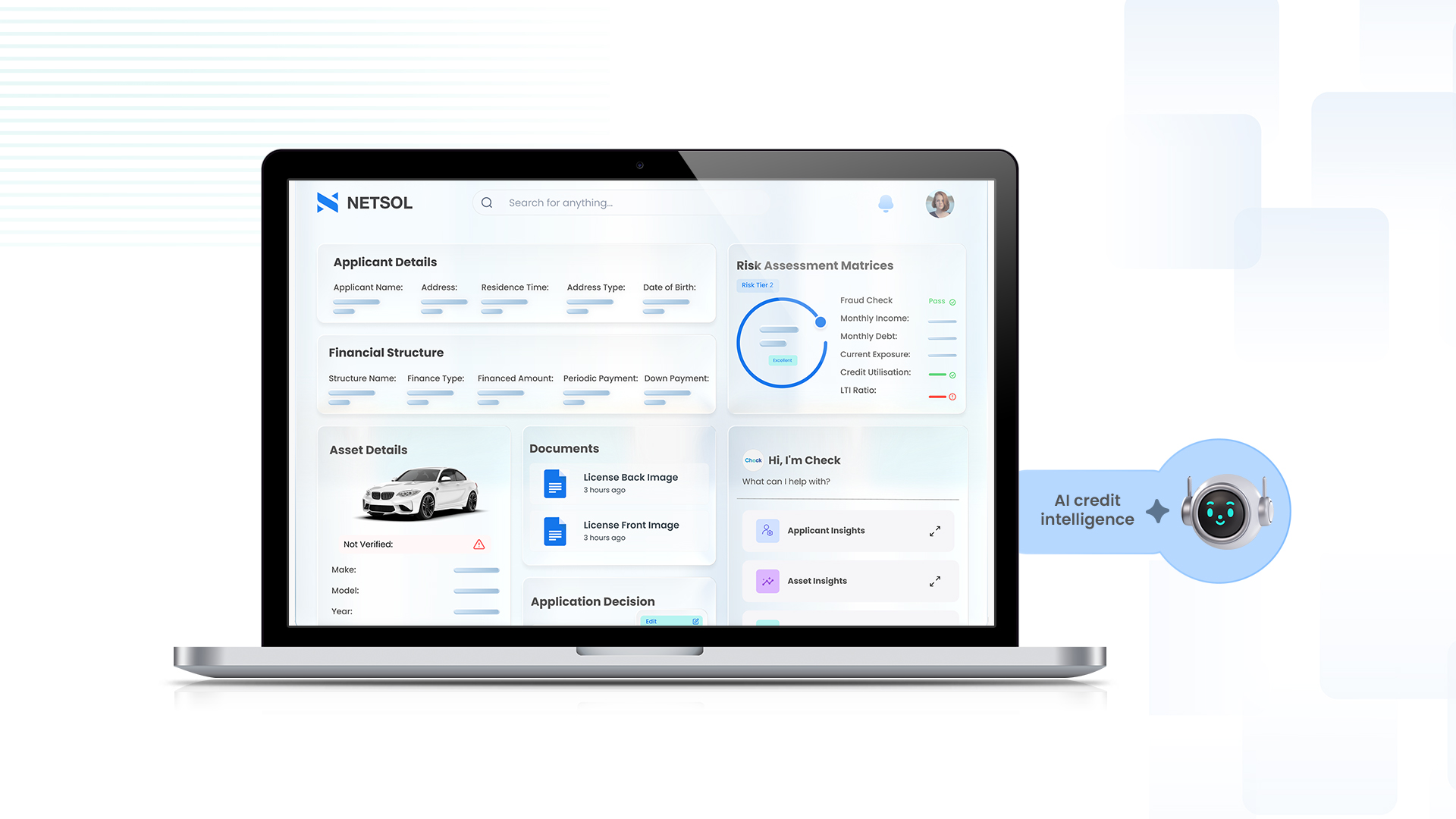
From credit checks to credit intelligence: How AI is redefining underwriting for captives
Blog